Wooden Potting Benches to Sell: Build Around a Gardener’s Workflow
Disclosure: This article contains affiliate links. I may earn a commission if you purchase through them.
A potting bench brings a gardener’s tools, containers, and work surface into one place. For a woodworker, it offers room for distinctive details without losing a clear purpose. The best starting point is a simple workflow: set down supplies, repot a plant, put tools away, and clean the surface afterward.
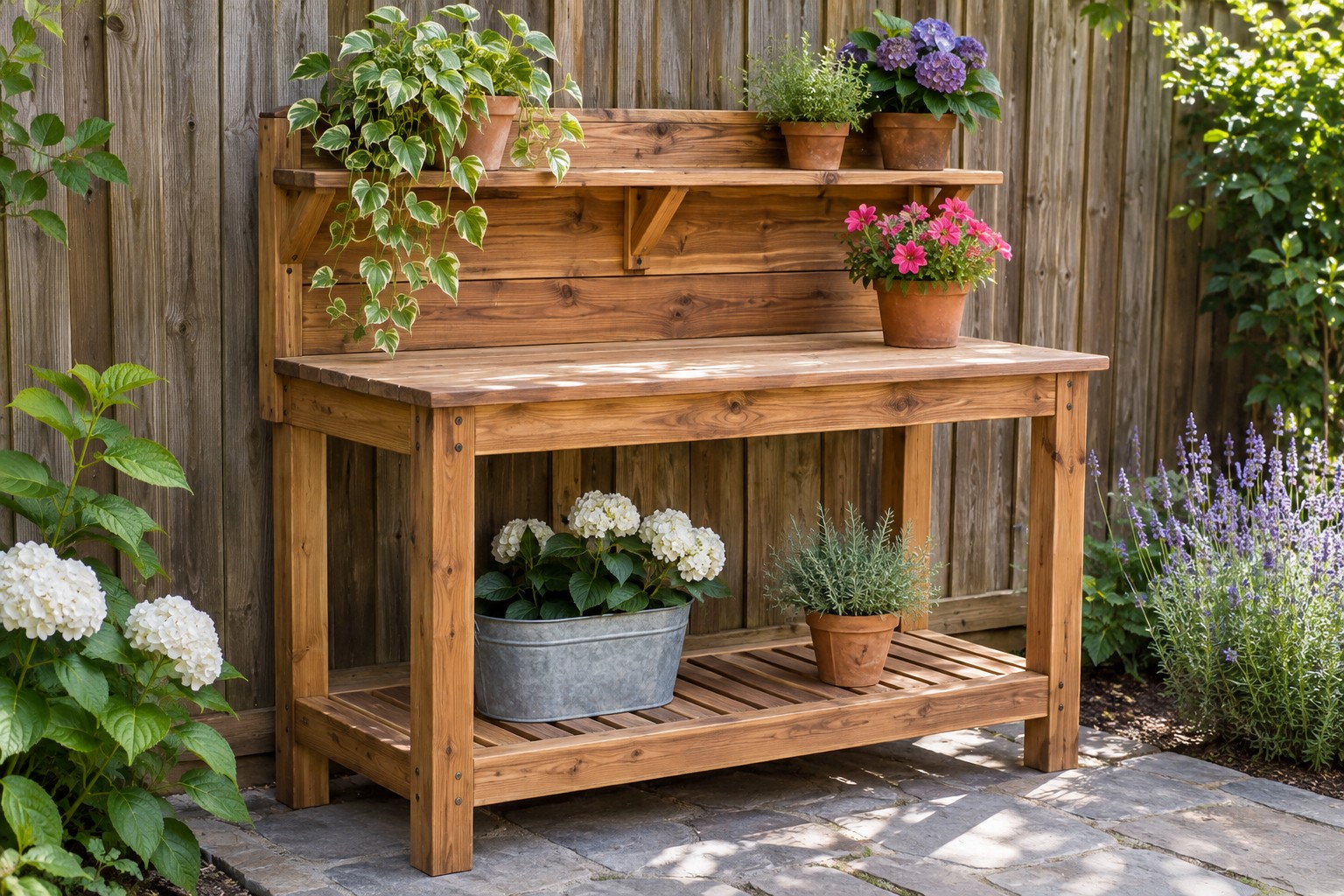
Map the work before adding features
Consider a stable worktop, an accessible lower shelf, and a modest tool rail. Those may be enough for a useful first model. A sink, plumbing connection, or complex soil bin can add development and maintenance needs that deserve their own planning.
Evaluate the working height with a full-size mockup. Different gardeners have different needs, so describe dimensions rather than calling one size universally ergonomic. Check reach to the shelf and the space needed for common pots.
Plan for messy, wet work
A potting bench encounters water, soil, abrasion, and changing weather. Select appropriate materials and construction details for the intended exposure. Design surfaces and corners so they can be cleaned without trapping damp debris.
Use a suitable structural plan and verify stability and support. Loaded shelves and a person leaning during work can affect behavior differently from a neatly staged photo. Do not publish a weight rating unless you have a sound basis for it.
Keep the first offer clear
Choose one standard configuration and a small finish range. Offer additional hooks or accessories only if you can supply them consistently and describe their use. Clearly state whether pots, plants, tools, or storage bins are included.
Provide care instructions and explain what outdoor exposure the bench is intended to tolerate. Make claims based on the materials and evidence you have, rather than presenting a coating as a permanent solution to every weather condition.
Solve assembly and delivery before listing
A full-size bench can be awkward to transport. Decide whether it will be delivered assembled, collected locally, or assembled by the customer. If parts are removable, test the instructions and hardware packaging with someone unfamiliar with the product.
Include transport, setup, and packaging in your cost sheet. Photograph the complete bench from several angles and show the storage dimensions. A gardener should be able to understand where the bench will fit and how it will work before placing an order.
Find a plan that fits your next step
Choose a project that matches your tools, experience, and intended use. Check the full materials list, dimensions, and construction details before buying supplies. The offer below is a separate resource; the examples and AI image in this article do not establish which projects are included.