Wooden Patio Planters to Sell: Design Around Drainage and Everyday Use
Disclosure: This article contains affiliate links. I may earn a commission if you purchase through them.
A wooden patio planter can make a small outdoor area feel more inviting, but the finished product must handle much more than a decorative plant. Water, wet growing medium, weather, and cleaning all shape the design. Start by deciding whether you are building a direct-planted container or a holder for separate nursery pots.
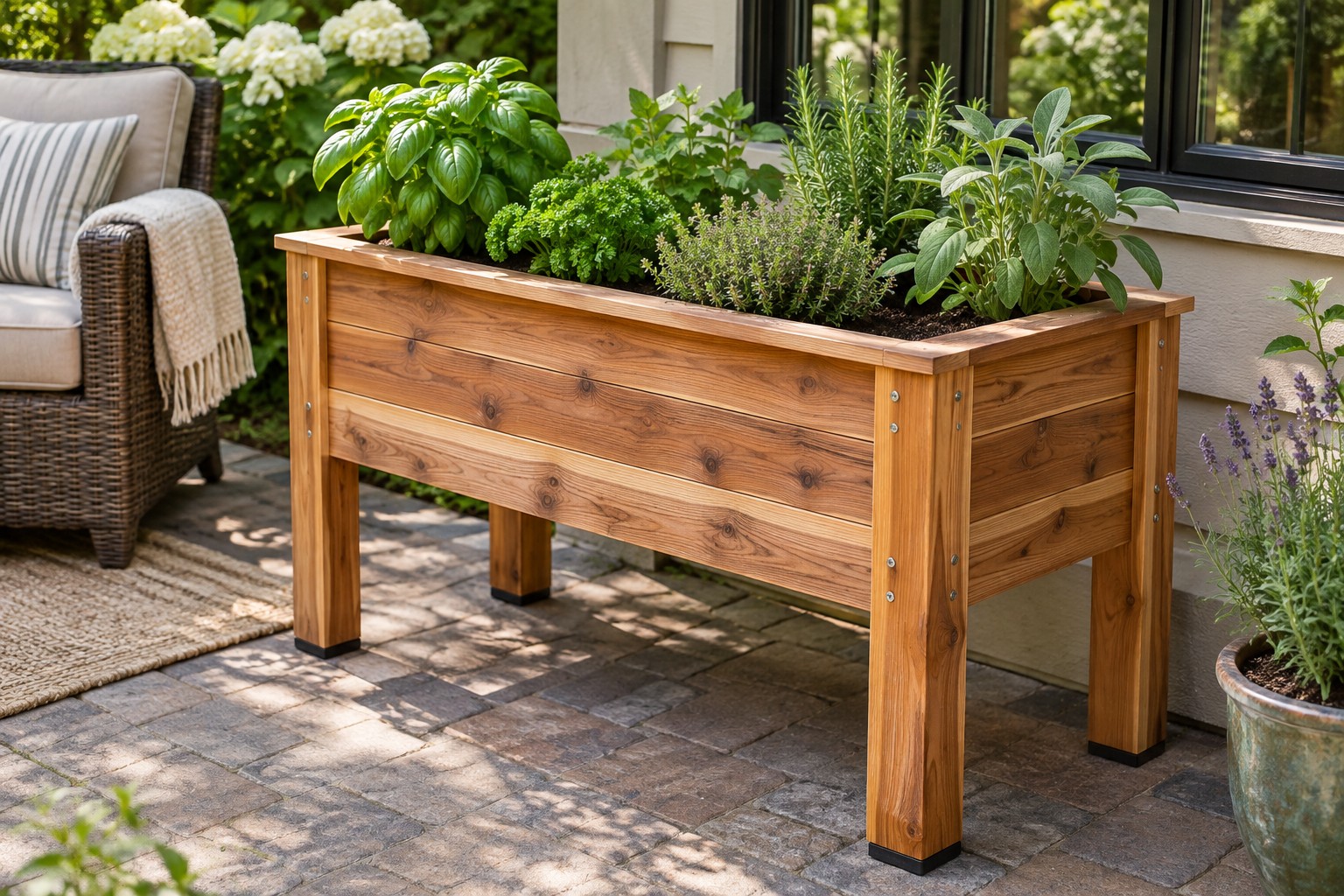
Choose the planting system first
A holder for removable pots can make replacement and cleaning easier. A direct-planted box needs a planting system, drainage strategy, and materials suited to that use. Those are different products, so describe the arrangement clearly.
For a pot holder, measure the actual pots you plan to accommodate, including their rims. For a planting box, develop the container and support structure together. Do not estimate the working load from an empty planter; wet contents can change the demands substantially.
Design to release water
Look for areas where water could collect against wood or hardware. Plan drainage and airflow as part of the structure rather than drilling a few holes after assembly. Consider where discharged water will go on the customer’s patio.
If liners or inserts are used, explain their purpose and limitations. A liner alone does not make every wood species or construction suitable for constant moisture. Follow product-specific guidance for materials, finishes, and any intended edible-growing use.
Make outdoor care easy to understand
State the wood and finish accurately and provide maintenance directions consistent with them. Explain whether the product is intended for a covered space or exposed weather. Avoid promising that it will never rot, move, fade, or need attention.
Photograph a real prototype and observe it in use before building repeated orders. Inspect joints, drainage, and contact points over time. A seasonal product still needs validation beyond the day it is photographed.
Offer sizes you can transport and reproduce
Plan standard dimensions around useful pot groupings or a specific patio footprint. Consider packed size, local pickup, and delivery before choosing an oversized design. Large custom planters may require separate quoting for handling and access.
Show what is included: plants, pots, soil, liners, and accessories should never be left ambiguous. Track build and delivery time alongside materials. A clear, durable product offer is more useful than a dramatic photograph with uncertain specifications.
Find a plan that fits your next step
Choose a project that matches your tools, experience, and intended use. Check the full materials list, dimensions, and construction details before buying supplies. The offer below is a separate resource; the examples and AI image in this article do not establish which projects are included.