Wooden Produce Crates to Sell at Markets: Develop a Useful Design
Disclosure: This article contains affiliate links. I may earn a commission if you purchase through them.
A wooden crate can be a carrying container, a display riser, or home storage. Those uses may look similar in a photograph, but they place different demands on the design. Before selling produce crates at a farmers’ market, decide exactly which job your product is meant to do.
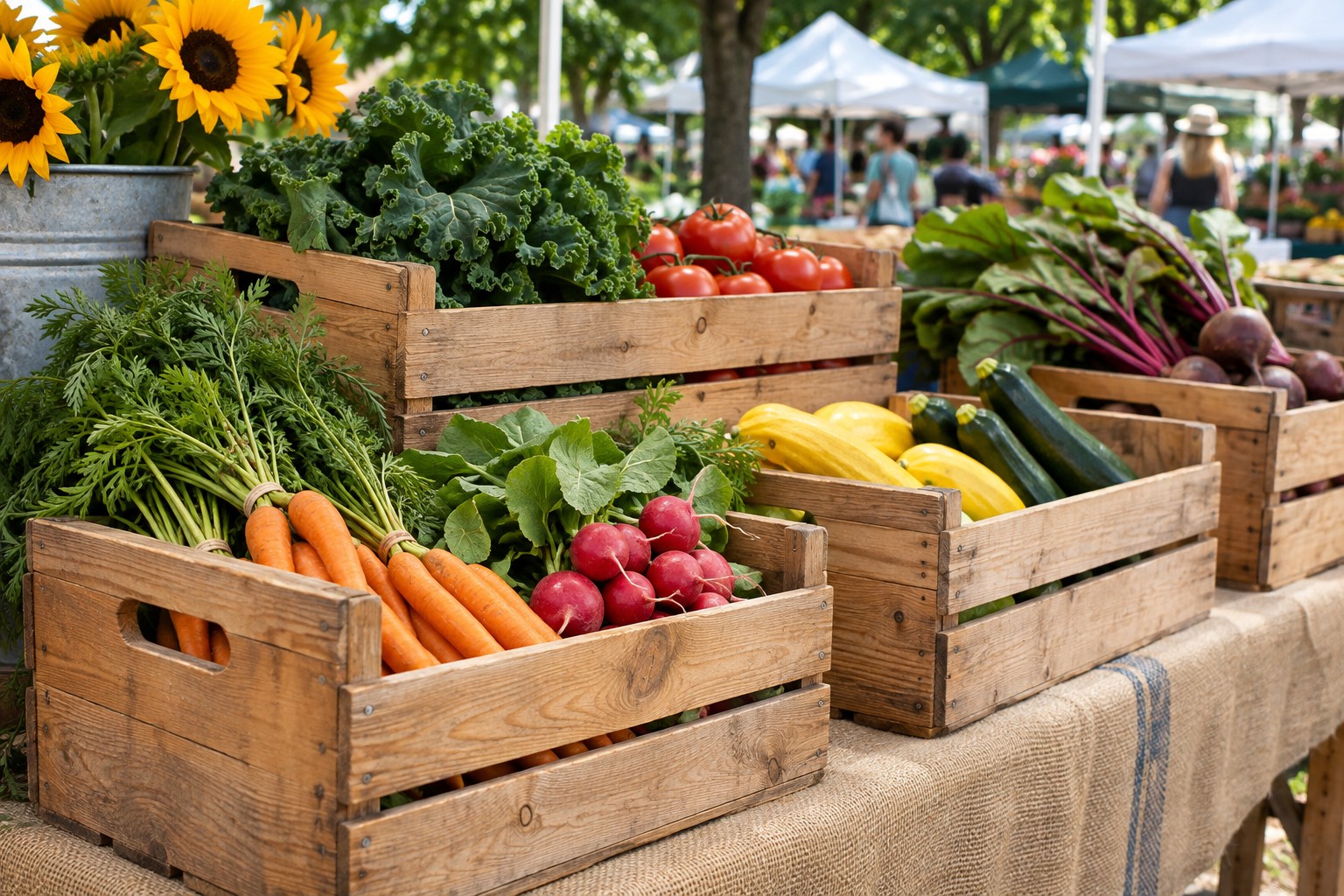
Choose shoppers or vendors as your first audience
A shopper may want a compact crate that fits in a car and is comfortable to carry. A vendor may care more about display dimensions, nesting, and how a collection looks on a stall. Start with one audience instead of trying to satisfy both with an oversized compromise.
Show a practical use scene and state whether the crate is intended for carrying, stationary display, or storage. Avoid implying that a decorative display crate can safely handle heavy loads just because produce is shown beside it.
Develop the handling details
Consider hand clearance, edge comfort, bottom support, and the relationship between contents and openings. Test a complete prototype under its intended conditions. If you publish a load capacity, it needs evidence from appropriate validation rather than a guess.
Nesting or stacking can save space, but each feature requires thoughtful tolerances and stability. Do not add it purely for a photograph. A simple design that behaves predictably can be a better first product than a versatile one with poorly tested features.
Be specific about materials and cleaning
Use wood of known identity and history. If the crate is intended for direct food contact, verify material, adhesive, and finish suitability for that use and your market. Do not assume any rustic-looking reclaimed wood is appropriate around food.
Explain cleaning, drying, and storage consistent with your construction. State whether a liner is needed or provided. Avoid broad sanitation or food-safety claims that you cannot substantiate.
Test sales without filling the workshop
Make a few samples in one size and calculate the real time spent on slats, handles, assembly, and finishing. Include the stall space and transport required by bulky inventory. A crate made from inexpensive wood can still be costly to sell.
At the market, note whether buyers ask for smaller carrying crates, larger displays, or sets. Offer made-to-order quantities only with clear timing and pricing. Use repeated requests and paid orders to guide the next size rather than stocking every possible version.
Find a plan that fits your next step
Choose a project that matches your tools, experience, and intended use. Check the full materials list, dimensions, and construction details before buying supplies. The offer below is a separate resource; the examples and AI image in this article do not establish which projects are included.