7 Small Woodworking Projects to Batch and Sell
Disclosure: This article contains affiliate links. I may earn a commission if you purchase through them.
Small products can suit a modest workshop, but size alone does not make a project quick or profitable. These seven woodworking ideas offer a starting point for a repeatable product line. Choose a few that use compatible materials, then complete a pilot batch before cutting a large inventory.
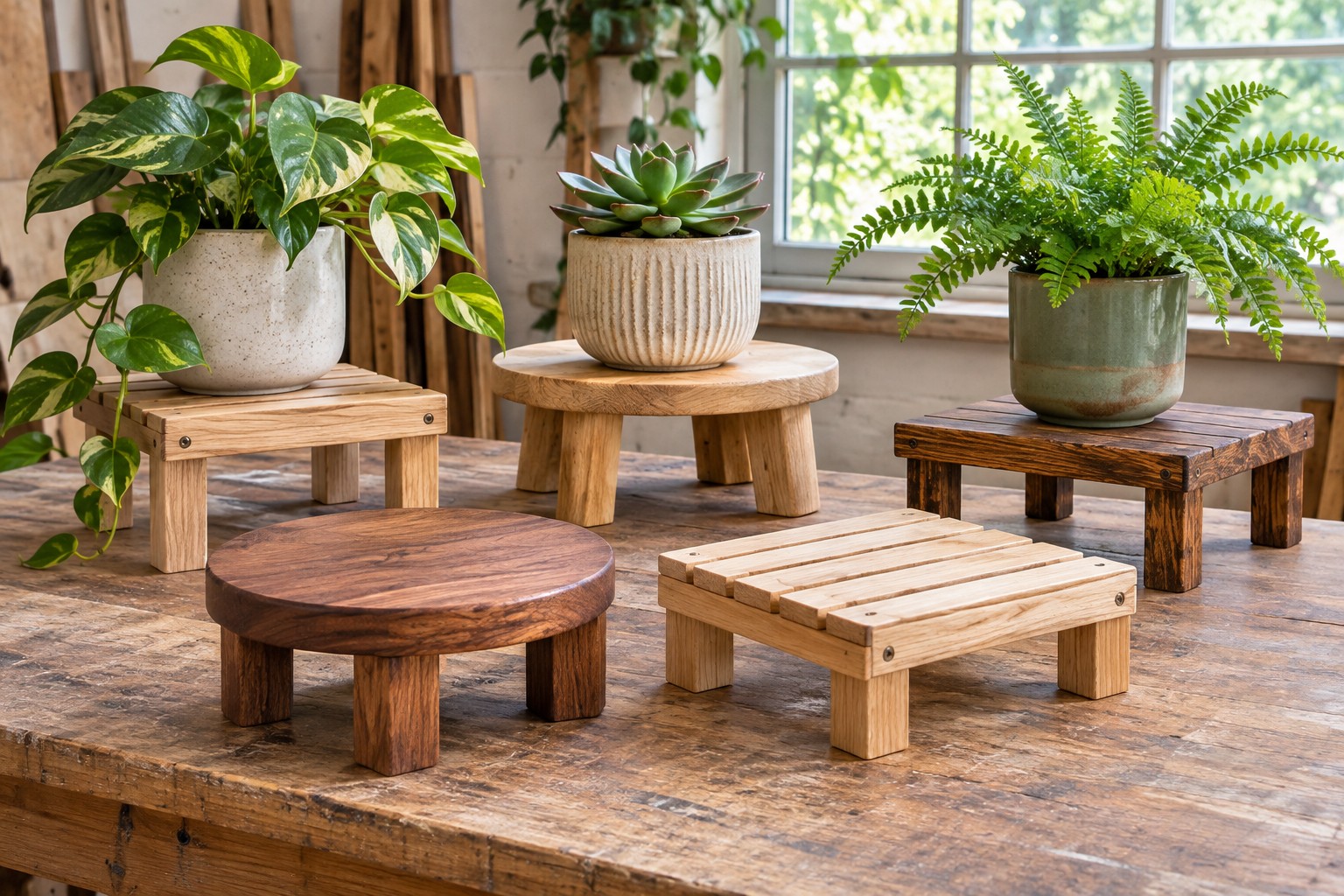
1. Small Plant Risers
A standard-size riser can use repeated components and a consistent assembly process. Choose a defined pot footprint and verify stability with the intended use. Matching designs in a small range may simplify production, but validate each size rather than assuming the same proportions work at every scale.
2. Fixed-Angle Phone Stands
A simple phone stand can share stock sizes with other desk accessories. Complete a prototype to check viewing angle, phone-case fit, and cable clearance before making repeated cuts. Keep the first version fixed rather than adding adjustable hardware. Small functional errors become expensive when copied across an entire batch.
3. Open Desk Trays
A shallow desk tray can organize pens and small accessories while giving you a repeatable assembly to refine. Make sure the interior is genuinely useful and accessible for sanding. Record the fitting and finishing time, not just cutting time. A smaller footprint does not necessarily mean lower labor.
4. Wooden Coaster Sets
A coaster set offers several matching pieces that can share a cutting and finishing process. Evaluate the chosen material and finish for the intended use, and give care directions you can support. Count sorting, edge work, packaging, and any pads in the cost rather than treating them as negligible extras.
5. Pencil Caddies
A standard caddy can use repeated panels or dividers, depending on construction. Fit the compartments around real supplies and inspect the interior before assembly makes access difficult. Begin with one arrangement and a limited finish range. Variation in hidden surfaces still matters when customers handle the finished piece.
6. Desk Card Holders
A compact card holder can turn a simple form into a clearly defined display product. Test the slot and angle with the card format you advertise. Check for consistency throughout the batch, since a small variation may affect fit. Avoid forcing unsuitable scraps into the product simply to claim less waste.
7. Low Display Pedestals
A small pedestal can raise a decorative object without requiring the scale of a side table. Keep bases flat and develop the joints for the intended support. Photograph a realistic use and specify the dimensions. Treat it as its own product rather than suggesting it is suitable for seating or climbing.
Use a pilot batch to find the right product
Make one complete sample, revise it, and then produce a few matching units using a written process. Check parts before assembly, joints before finishing, and the completed product before packing. Keep an approved reference sample.
Track material yield, hands-on time, rejects, packaging, and selling costs. Compare what remains after direct costs, not revenue alone. Repeat the products that buyers order and that you can make consistently; refine or retire those whose customization or finishing work consumes the margin.
Find a plan that fits your next step
Choose a project that matches your tools, experience, and intended use. Check the full materials list, dimensions, and construction details before buying supplies. The offer below is a separate resource; the examples and AI image in this article do not establish which projects are included.