Outdoor Wooden Furniture to Sell: Choose Your First Product Carefully
Disclosure: This article contains affiliate links. I may earn a commission if you purchase through them.
Outdoor furniture has to do more than look inviting in a garden photograph. Sun, rain, uneven ground, and repeated use all influence how a piece performs. If you want to sell outdoor wooden furniture, choose a first product you can develop, validate, maintain, and deliver with confidence.
Begin with a manageable furniture category
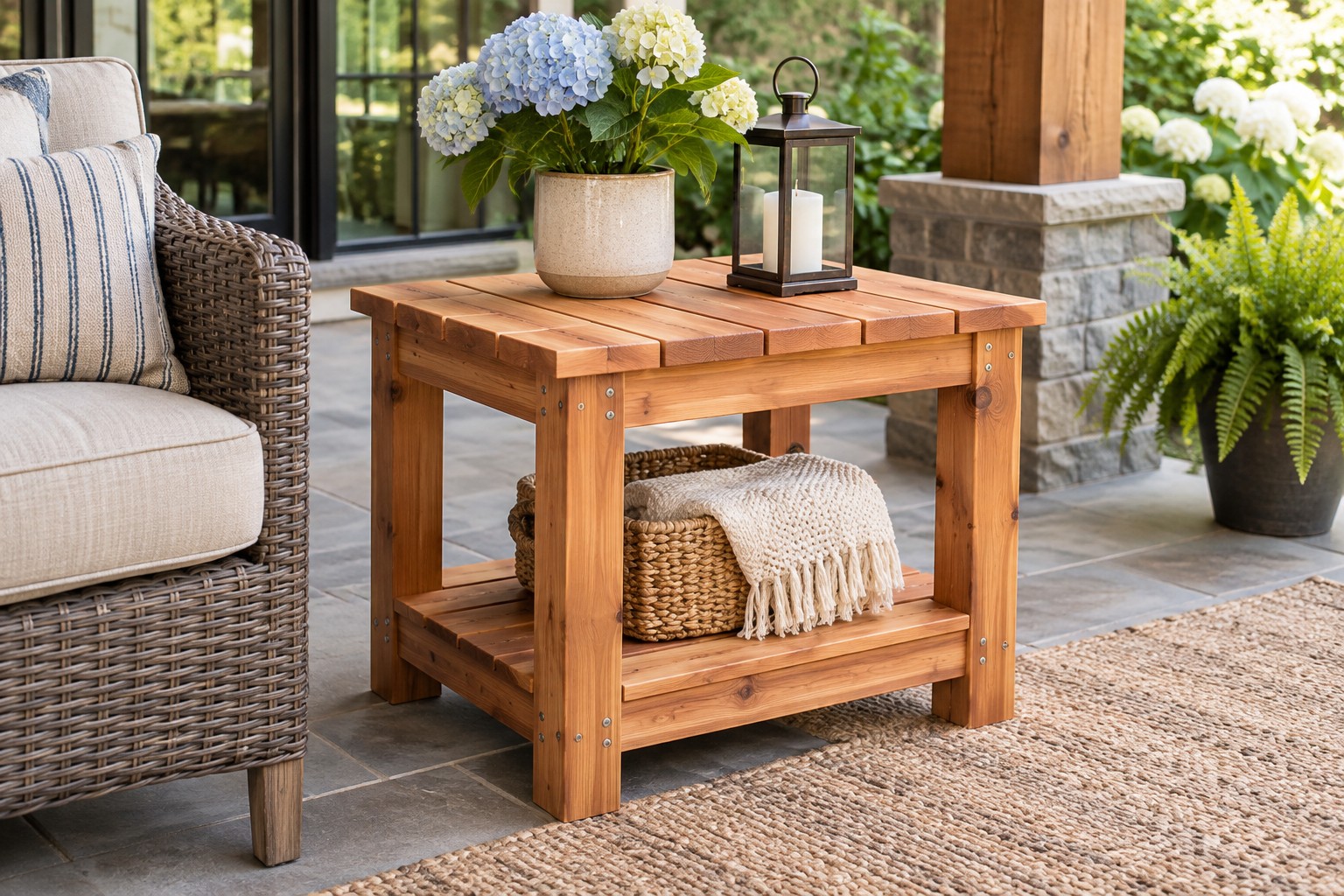
A compact side table, plant stand, or small outdoor console can be a more manageable starting point than a full dining set. Seating adds significant demands because people rely on the structure to support them. Select the category before deciding on decorative details.
Define the intended setting. A covered porch and an exposed garden impose different conditions. State the intended use in the product description and avoid implying that one finish makes every wood suitable for permanent outdoor exposure.
Plan for water and wood movement
Consider drainage, drying, end-grain exposure, fastener compatibility, and seasonal movement as part of the design. Outdoor suitability depends on the entire assembly, not simply a wood species name. Follow appropriate construction guidance for the product and materials.
Avoid trapped-water details and joints that cannot tolerate the expected movement. Use a validated plan and suitable hardware. A decorative image is useful for inspiration, but it should never be treated as a complete structural design.
Treat maintenance as part of the product
Explain the finish used, its care instructions, and the expected need for inspection or renewal. Be clear about storage recommendations and conditions that may change the appearance. Natural weathering and a failed coating are different outcomes; buyers should understand what you are promising.
Photograph a real completed prototype outdoors and observe how it behaves before offering repeated orders. Inspect joints and surfaces over time. A short demonstration cannot establish years of durability, so keep claims proportionate to the evidence.
Include delivery in your price planning
Measure and weigh the finished and packed product. If you offer local delivery, define the service area, access requirements, and assembly responsibilities. Large items can become unprofitable when handling and transport are treated as afterthoughts.
Start with one size and a limited finish range. Track build time, maintenance questions, and delivery costs. Expand only when the first product performs as intended and the sale price covers the real work involved.
Find a plan that fits your next step
Choose a project that matches your tools, experience, and intended use. Check the full materials list, dimensions, and construction details before buying supplies. The offer below is a separate resource; the examples and AI image in this article do not establish which projects are included.