7 Woodworking Projects to Sell at Farmers’ Markets
Disclosure: This article contains affiliate links. I may earn a commission if you purchase through them.
Farmers’ market shoppers often want something useful, easy to understand, and manageable to carry home. These seven woodworking projects connect with gardening, kitchens, and everyday organization. Check the market’s vendor rules first, then test a small collection that suits its audience.
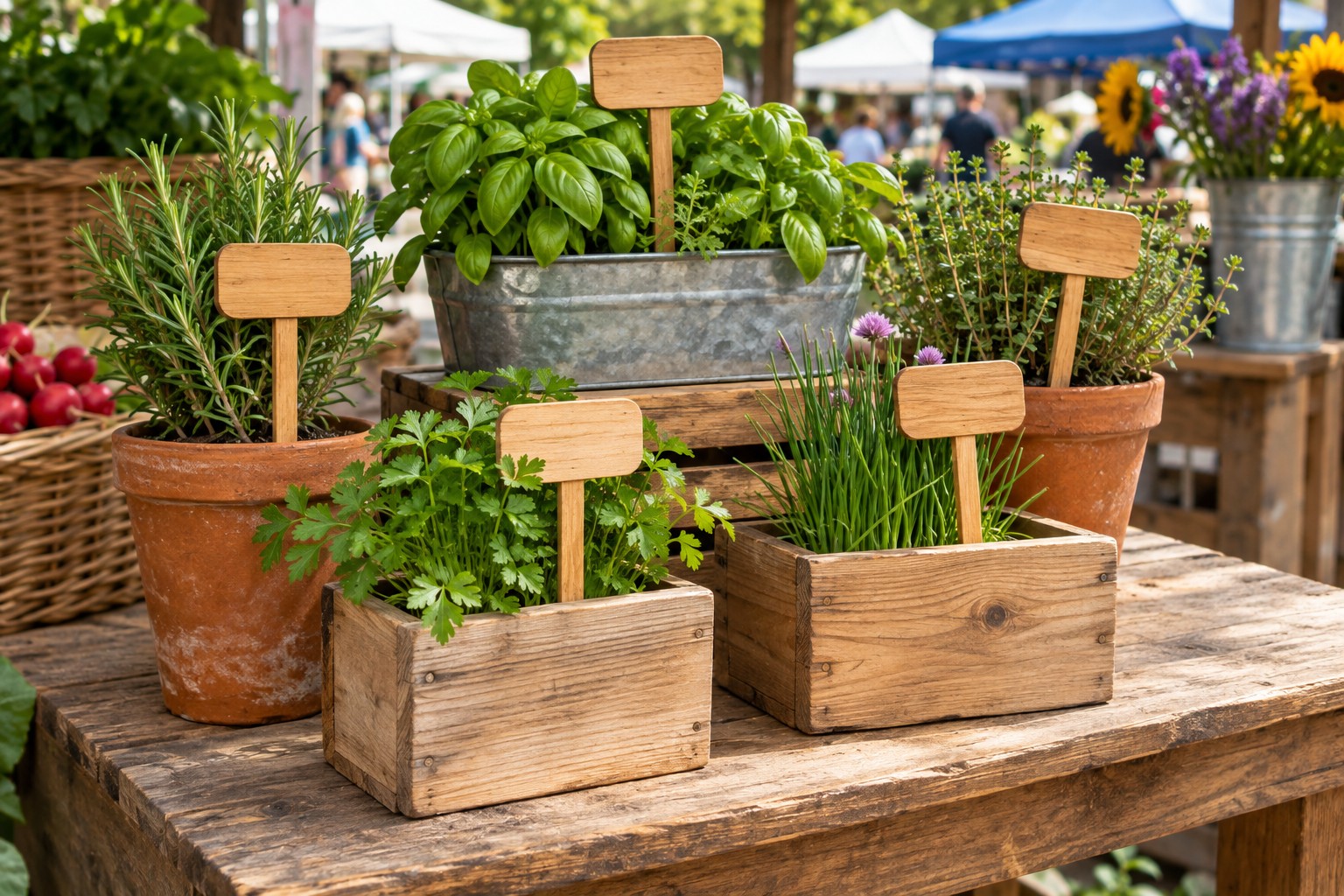
1. Wooden Herb Markers
A set of herb markers can make a compact gardening product with an obvious purpose. Choose a readable lettering method and define the plant names and quantities included. Explain intended outdoor use and care accurately. Start with a standard set rather than offering unlimited custom labels during a busy market day.
2. Small Planter Covers
A wooden cover for a removable nursery pot can make a simple plant display. Design around a specific pot size and leave the water-handling arrangement clear. Tell buyers whether they receive the pot or only the wooden cover. A removable planted example helps demonstrate the fit without obscuring the actual product.
3. Plant Risers
Low risers can add height to tabletop plant groupings without the transport demands of large furniture. Check stability and support with the intended pots. Show the product empty as well as styled, and provide complete dimensions. Clear indoor or outdoor use information helps buyers decide whether it suits their space.
4. Recipe-Card Stands
A wooden stand can keep a recipe card visible on a kitchen counter. Test the viewing angle and fit with the paper or card format you advertise. A restrained design can be easy to demonstrate at a booth. State whether cards are included, and avoid suggesting it supports large tablets unless evaluated for that use.
5. Wooden Serving Trays
A tray can appeal to shoppers looking for a practical home gift. Define whether it is intended for carrying dishes or organizing a surface, then develop the handles and base accordingly. Use a sample to demonstrate its size and include cleaning directions suited to its materials and finish.
6. Produce Crates
A small crate can serve shoppers or vendors, depending on its structure and size. Decide whether the product is for carrying, storage, or stationary display before describing it. Comfortable hand clearance and a well-supported base matter. Bulky inventory also takes booth and vehicle space, so include transport in the cost calculation.
7. Garden Tool Caddies
A wooden caddy can gather small hand tools for a gardening session. Design around actual tools and evaluate the handle, joints, and base for intended use. Specify whether it is for sheltered storage or outdoor exposure. A display sample can show the function while making clear that tools are not included.
Test the booth, not just the products
Choose one theme and a few complementary pieces at different price points. Use readable prices and stable displays, and plan for the venue’s weather and setup conditions. Keep spare inventory organized so visitors can browse without unpacking a pile.
Record opening inventory, sales, questions, and the full day’s costs: stall fees, travel, payment processing, setup, and selling time. Package purchases for comfortable carrying and include suitable care instructions. Use paid orders to guide your next market batch.
Find a plan that fits your next step
Choose a project that matches your tools, experience, and intended use. Check the full materials list, dimensions, and construction details before buying supplies. The offer below is a separate resource; the examples and AI image in this article do not establish which projects are included.