8 Woodworking Projects for Small Living Spaces to Sell
Disclosure: This article contains affiliate links. I may earn a commission if you purchase through them.
Small-space shoppers want useful surfaces and storage without adding unnecessary bulk. These eight woodworking projects address everyday problems in compact homes. Develop each around real measurements and a clear purpose, then test buyer interest before offering many sizes or custom variations.
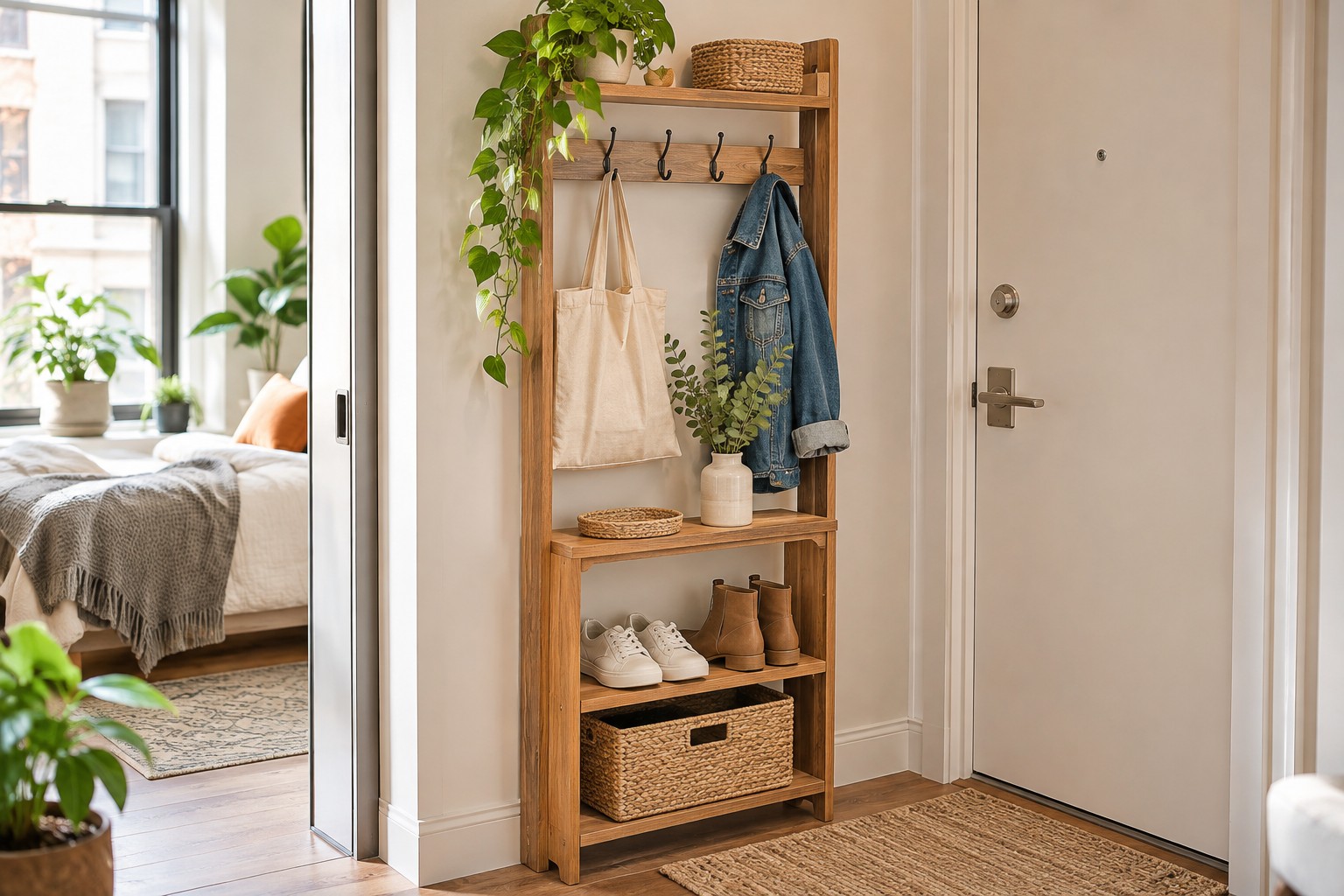
1. Narrow Entry Shelf
A shallow shelf can create a landing spot for a wallet or small essentials near the door. Keep the intended contents modest and show how far the shelf projects from the wall. Check door swing in your sample setting, and provide mounting information that matches the design and intended surfaces.
2. Wall Key Rack
A hook rail moves keys and lanyards off a crowded tabletop. Space hooks using actual key rings so adjacent items do not become tangled. A compact version may suit an apartment entrance, but buyers still need exact dimensions, included hardware details, and clear installation requirements.
3. Desktop Monitor Shelf
A wooden monitor shelf can make room underneath for a keyboard or small supplies. Design the structure for the intended equipment and verify support and stability. List the usable space beneath the shelf and the complete footprint. Avoid suggesting a universal ergonomic benefit or load capacity without a basis for it.
4. Sofa-Side Table
A small table beside a couch provides a place for a cup or book without a central coffee table. Work around the sofa arm, floor space, and nearby walking route. Keep stability central to the design; a very narrow footprint should not be pursued at the expense of predictable behavior.
5. Compact Plant Riser
A low riser can organize a tabletop plant arrangement while preserving a light appearance. Offer dimensions that correspond to real pots and check the completed assembly in its intended use. Explain how to protect the wood from watering spills, and state whether pots or plants are included.
6. Slim Book Ledge
A shallow ledge can display a few favorite books without the depth of a bookcase. State the usable shelf depth and front-lip height, since book formats differ. Develop appropriate mounting and explain any limitations. A room photograph should be accompanied by an unobstructed view of the ledge itself.
7. Bedside Caddy
A wooden bedside caddy can keep glasses, a phone, or a book close at hand. Decide whether the design is freestanding, attached, or wall-mounted, then develop that installation rather than promising it fits every bed. Show the full dimensions and any required clearances so buyers can judge compatibility.
8. Stackable Storage Tray
A shallow tray can sort desk or dresser essentials without the bulk of a cabinet. If you offer stacking, develop reliable alignment and evaluate the intended stack for stability. Begin with a defined arrangement and clearly state how many trays the buyer receives, rather than implying every display configuration is included.
Show the space saved, then show the measurements
Photograph each product doing one useful job, such as holding keys or clearing a desk. Add a plain image and complete dimensions, including brackets, hooks, and projections. Wall-mounted products need a suitable attachment method and specific installation information.
Test one room-focused collection first. Repeated requests for a particular width or height can guide a second size; a standard range is easier to price and produce than unlimited customization.
Find a plan that fits your next step
Choose a project that matches your tools, experience, and intended use. Check the full materials list, dimensions, and construction details before buying supplies. The offer below is a separate resource; the examples and AI image in this article do not establish which projects are included.