7 Beginner Woodworking Projects to Test in Your First Shop
Disclosure: This article contains affiliate links. I may earn a commission if you purchase through them.
If you are searching for woodworking projects for beginners that sell well, start with a useful object you can finish cleanly and reproduce. The right first project depends on your tools and experience. These seven ideas give you a focused shortlist, with a practical detail to consider before making inventory.
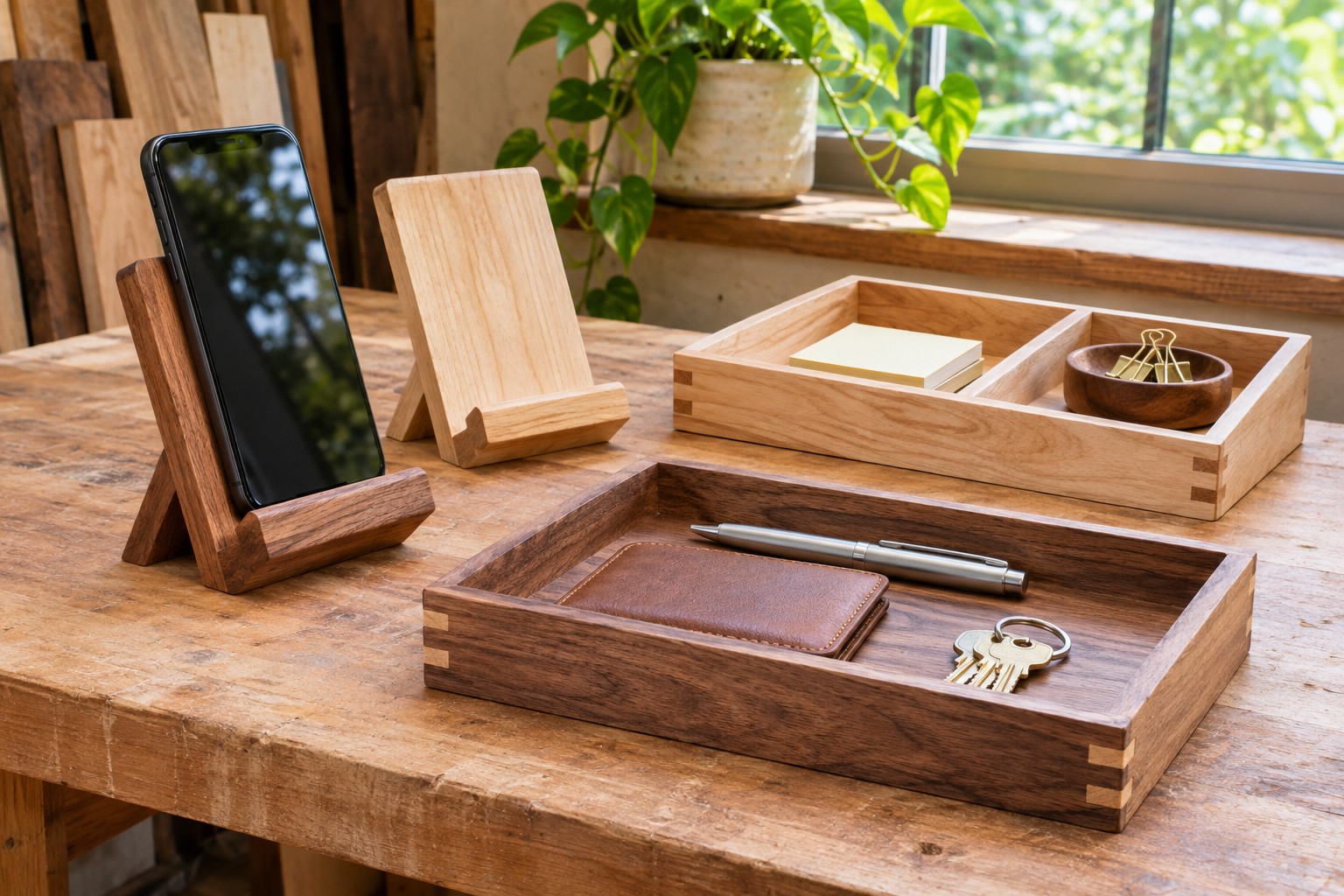
1. Desktop Phone Stand
A phone stand is a compact project with an easy-to-demonstrate purpose. Start with a fixed-angle design instead of adjustable hardware. Test it with a phone in its case, check charging-cable clearance, and make sure the base stays steady. A photograph of the stand in use helps buyers understand its size.
2. Shallow Catchall Tray
A catchall tray gives keys, coins, or desk accessories a home. Choose a construction method that matches your skills: a tray with assembled sides and a routed recess require different techniques. Pay attention to inside corners and the underside, where rough surfaces can undermine an otherwise polished product.
3. Pencil Caddy
An open pencil caddy can use a small number of components while teaching careful layout and assembly. Test compartment sizes with ordinary stationery before cutting a batch. Keep the first version simple, with accessible spaces that are easy to sand. Clear internal dimensions help buyers assess what it will hold.
4. Small Plant Riser
A low plant riser can introduce basic joinery without the scale of a full table. Build around a defined pot size, then evaluate the finished assembly for stability and support. Explain whether it is intended for indoor use and how buyers should prevent water from reaching vulnerable surfaces.
5. Simple Bookends
A pair of bookends offers practice in making matching components and square assemblies. Keep the shape straightforward and test it with the books you intend to show. Buyers need the dimensions and intended use; a small decorative set should not be presented as suitable for every heavy textbook collection.
6. Picture Ledge
A picture ledge turns a few parts into a useful display surface, but accuracy and mounting still matter. Check the fit of actual frames, develop an appropriate attachment method, and describe the installation requirements. Begin with one standard length so you can refine the process before offering custom sizes.
7. Small Display Pedestal
A low wooden pedestal can highlight a vase, framed photograph, or other decorative object. A clean top and flat base are more valuable than elaborate shaping on a first version. Define what it is intended to support and photograph that use accurately. Keep it distinct from furniture intended for sitting or standing.
Turn one idea into a small batch
Complete one prototype before making additional parts. Check square cuts, secure joints, smooth edges, and the finish against an approved sample. Follow tool and finishing instructions, including the time needed before handling or packing.
Then make three matching units and record the entire job, including material waste and packaging. Start with one size and a limited finish choice. If the numbers do not support a fair price for your time, refine the design before increasing production.
Find a plan that fits your next step
Choose a project that matches your tools, experience, and intended use. Check the full materials list, dimensions, and construction details before buying supplies. The offer below is a separate resource; the examples and AI image in this article do not establish which projects are included.