Handcrafted Wooden Cutting Boards to Sell on Etsy: A Maker’s Guide
Disclosure: This article contains affiliate links. I may earn a commission if you purchase through them.
Handcrafted wooden cutting boards can be practical kitchen tools, thoughtful gifts, or both. If you want to sell them on Etsy, the challenge is to explain exactly what makes your board useful while keeping quality consistent across every order. Begin with a focused design rather than a long list of wood combinations.
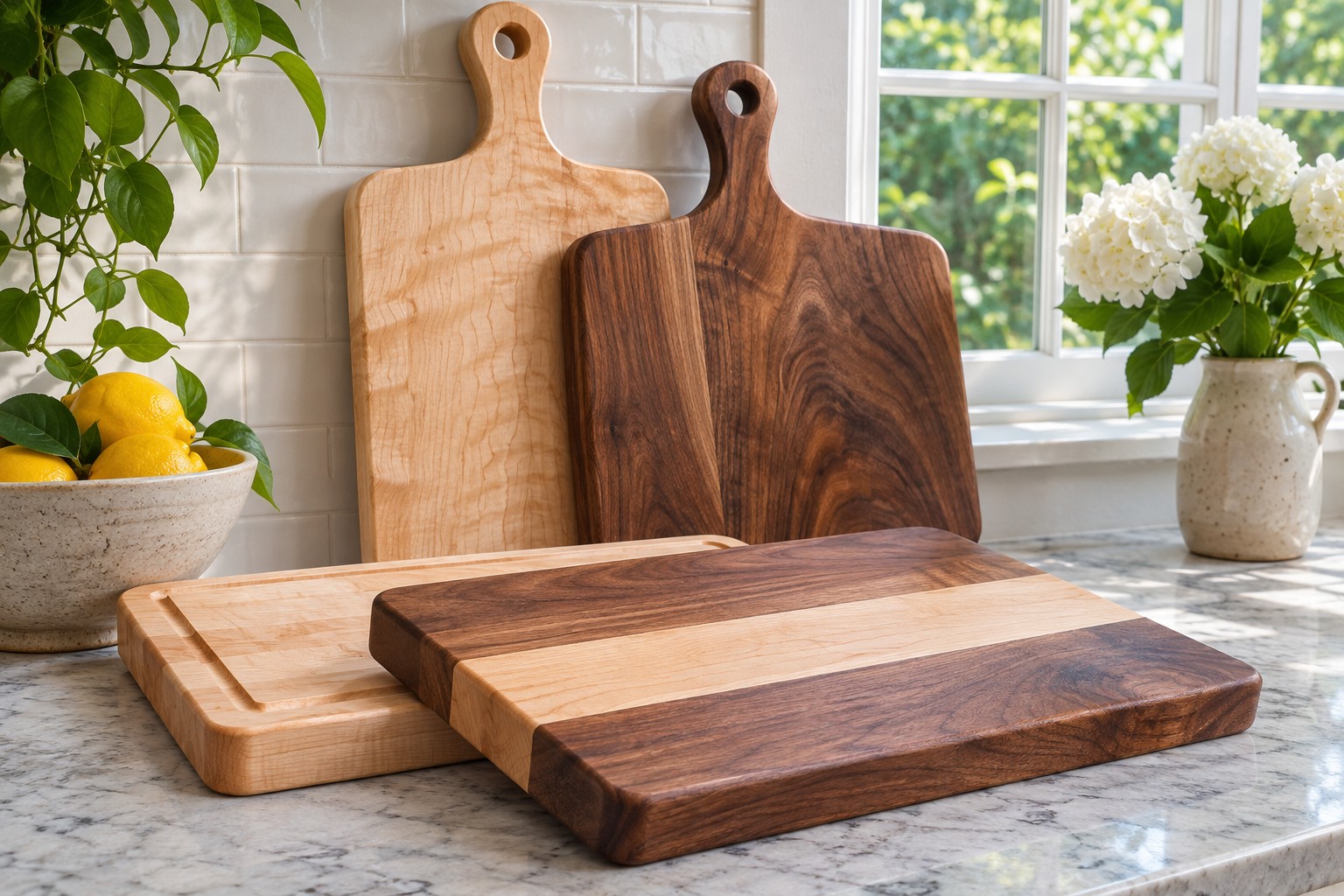
Give each board a defined purpose
A compact prep board, a larger everyday cutting board, and a handled serving board serve different customers. Choose one purpose first. A board designed for chopping needs a stable working surface, while a serving piece may prioritize presentation and comfortable carrying.
List the actual usable dimensions and thickness. Photograph the board beside familiar kitchen objects, but also show it alone. Buyers should not have to guess whether the image depicts a small cheese board or a large work surface.
Make materials and construction part of the plan
Start with sound lumber of known identity and a design appropriate to its grain and movement. Avoid salvaged material with unknown chemical exposure. Verify that adhesives and finishes are suitable for the intended food-contact use and follow their directions, including curing requirements.
As a material reference, the FDA Food Code permits hard maple or equivalently hard, close-grained wood for certain cutting surfaces. That does not certify an individual handmade board; your construction and material choices still matter. The reference is linked below.
Offer personalization that fits real use
A name or date near an edge can leave more working space than lettering across the center. Show buyers where personalization will go and establish a clear approval process for spelling. Avoid an unlimited menu of fonts, sizes, and placements until you know how long each order takes.
Make one finished sample with the actual engraving method you will use. Photograph the contrast accurately and describe natural variations in grain. Do not use a digital mockup as the only evidence of how the finished personalization looks.
Pack and describe the board carefully
Weigh and measure the packed product before setting shipping charges. Protect corners and keep the board from moving inside the carton. Include care instructions consistent with your materials and finish: explain cleaning, drying, storage, and any recommended maintenance.
Your listing should state whether props, accessories, and gift wrapping are included. Track time spent on sanding, engraving, finishing, and packing so a popular order does not become an unprofitable one. Test a small batch before expanding your collection.
Find a plan that fits your next step
Choose a project that matches your tools, experience, and intended use. Check the full materials list, dimensions, and construction details before buying supplies. The offer below is a separate resource; the examples and AI image in this article do not establish which projects are included.
Reference: FDA Food Code material reference.