11 Woodworking Projects That Sell: A Practical First Collection
Disclosure: This article contains affiliate links. I may earn a commission if you purchase through them.
Looking for woodworking projects that sell? Start with useful pieces that buyers can understand at a glance and that you can make consistently. These 11 ideas cover home organization, gifts, and garden products. They are starting points to test with your customers, rather than a ranking of guaranteed bestsellers.
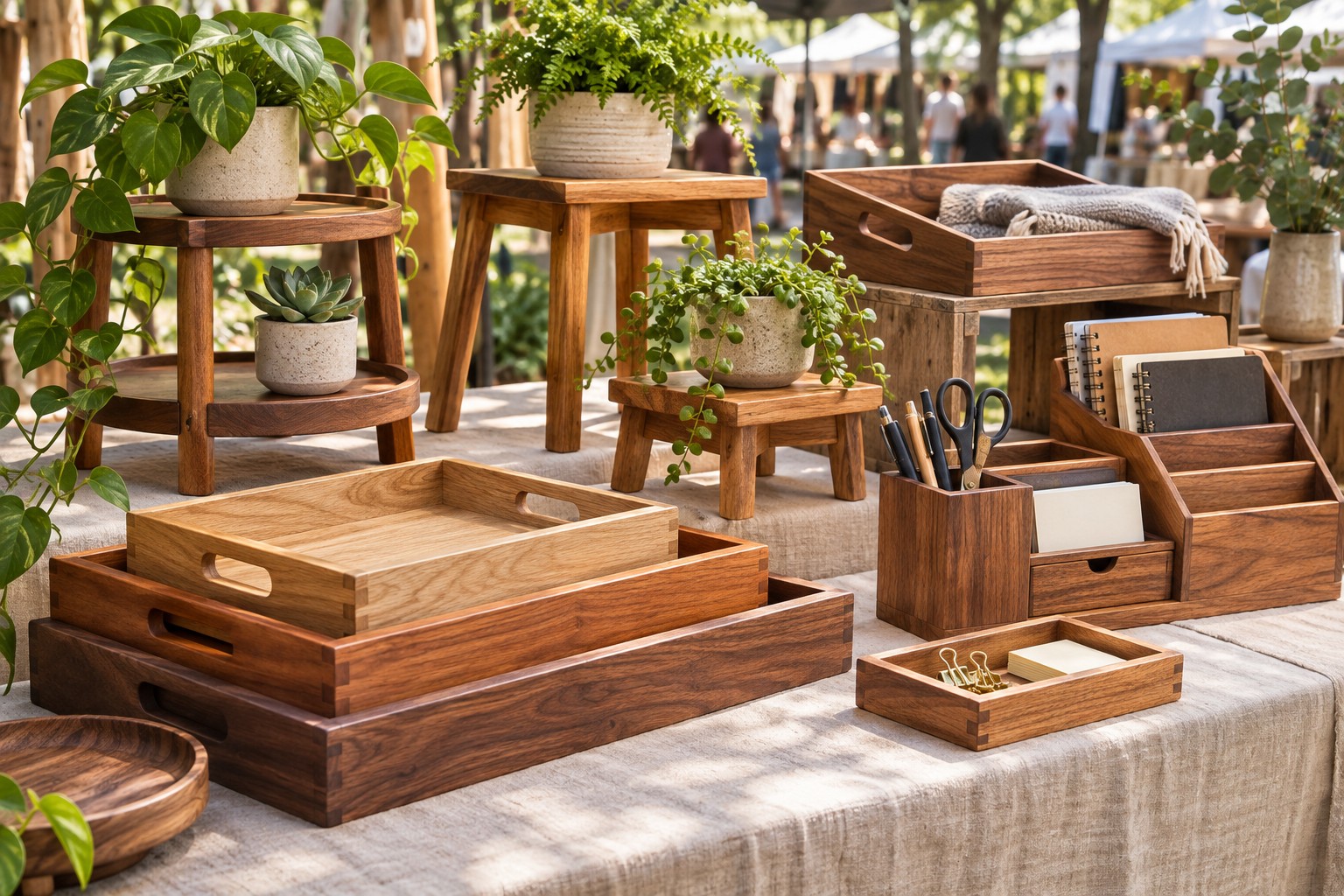
1. Entryway Key Rack
A wooden key rack gives keys and lanyards a dedicated place near the door. Try a simple rail with evenly spaced hooks before adding shelves or mail slots. Show the rack empty and in use, and make the mounting requirements clear so buyers can judge whether it suits their wall.
2. Desktop Phone Stand
A phone stand keeps a screen visible during calls, cooking, or desk work. Test the viewing angle, charging-cable clearance, and fit with different phone cases. A clean, compact design can be easier to reproduce than a stand with several adjustable parts, making it a useful candidate for a small first batch.
3. Small Plant Riser
A plant riser adds height to a tabletop display without requiring a large furniture build. Design around a specific pot footprint and verify stability with the intended load. Photograph it with a plant for context, then provide the full dimensions and state whether the pot is included.
4. Picture Ledge
A shallow ledge lets customers display framed photos or small artwork. Concentrate on straight assembly, a smooth finish, and a mounting system appropriate to its intended use. Offer a standard length first. Exact depth and front-lip dimensions help buyers decide whether their frames will fit.
5. Wooden Serving Tray
A tray can organize an ottoman or carry dishes, depending on its construction. Define the intended use before choosing handles and base support. Check grip comfort and inspect the completed assembly. Photograph the usable interior, and avoid suggesting that a decorative tray has a tested carrying capacity unless it does.
6. Bookends
Bookends pair a recognizable function with room for a distinctive shape or wood detail. Test them with the kinds of books shown in your listing; a decorative pair may not support heavy volumes. A coordinated set can fit a desk collection, a reading nook, or a gift display.
7. Pencil Caddy
A pencil caddy offers a straightforward way to organize a desk. Size the compartments around real pens, pencils, and markers rather than appearance alone. Inspect interior corners and edges closely. Start with one layout that you can reproduce accurately instead of offering a different compartment arrangement for every order.
8. Keepsake Box
A small wooden box can hold letters, photographs, or meaningful objects. Its appeal depends on details buyers notice up close: a comfortable lid, smooth edges, and a tidy interior. Complete a sample before pricing; fitting a lid and installing hardware can take more time than the box's size suggests.
9. Garden Markers
Wooden garden markers help identify herbs or seedlings and can form a compact market product. Choose lettering that remains readable at the intended size and explain how the materials should be used outdoors. Offer a clearly defined set so buyers know the plant names and quantities included.
10. Slim Sofa Table
A narrow table can use the space behind a sofa for a lamp or small accessories. Provide complete top and base dimensions, and develop the structure for stability. This is a larger project than the others here, so include delivery and handling when deciding whether it fits your first collection.
11. Handcrafted Cutting Board
A cutting board combines practical use with gift potential. Choose sound wood of known identity and verify that adhesives and finishes suit the intended food-contact use. Start with a repeatable shape and size. Include care instructions, and remember that personalization, sanding, curing, and packing all affect the real cost.
Choose three projects to test first
Build a focused collection instead of making all 11 ideas at once. A desk range could combine a phone stand, pencil caddy, and bookends. Make a complete sample of each and record materials, hands-on time, finishing, packaging, and selling costs.
Price the full job, then test a small batch. Track paid orders and recurring requests rather than relying on compliments alone. Keep the designs that buyers understand and that you can reproduce at a sustainable price.
Find a plan that fits your next step
Choose a project that matches your tools, experience, and intended use. Check the full materials list, dimensions, and construction details before buying supplies. The offer below is a separate resource; the examples and AI image in this article do not establish which projects are included.